QUALITY SYSTEM

Quality System

Product Testing · Equipment & Production · Independent Reports

TESTING INSTRUMENTS

Testing Instruments & Standards

01 / TESTING INSTRUMENTQuality laboratory
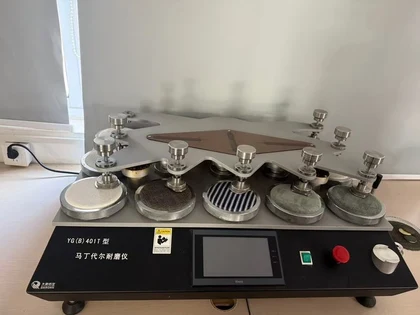
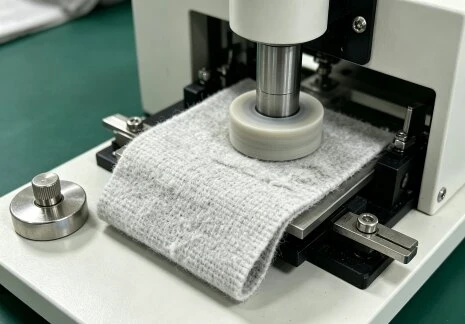
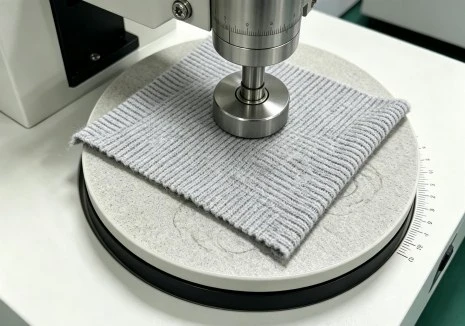
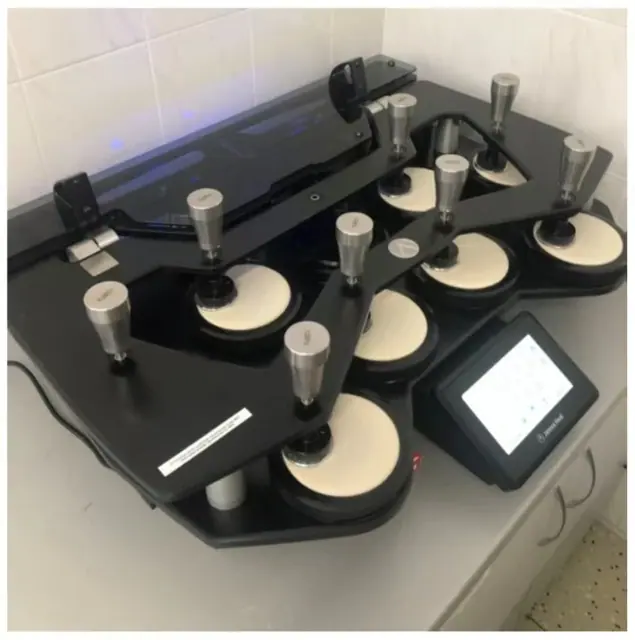
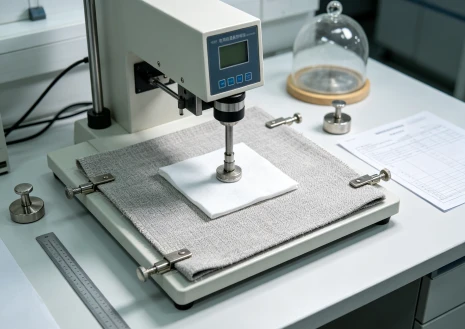
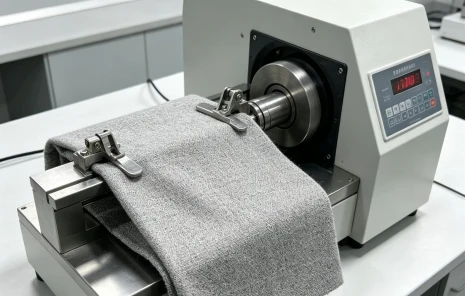
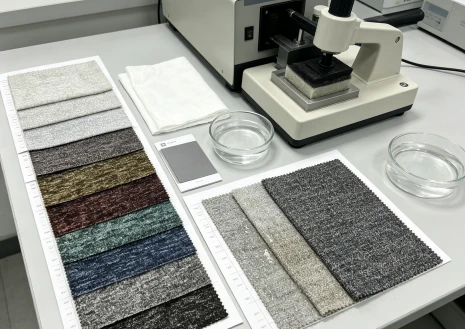
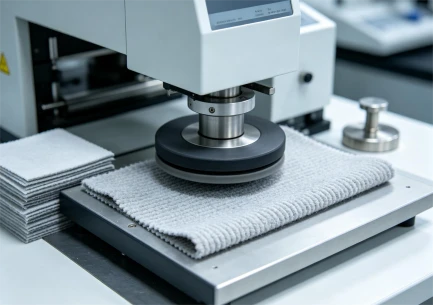
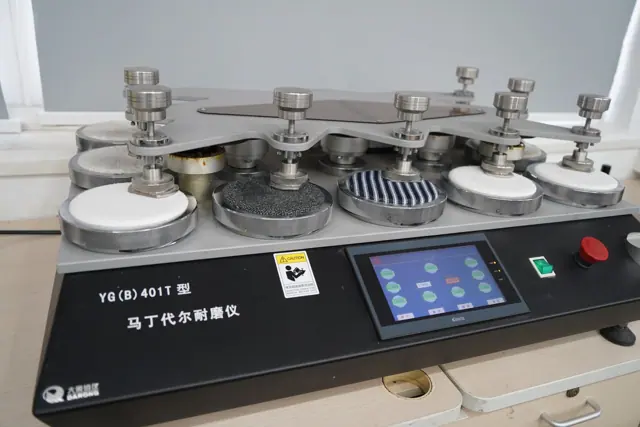
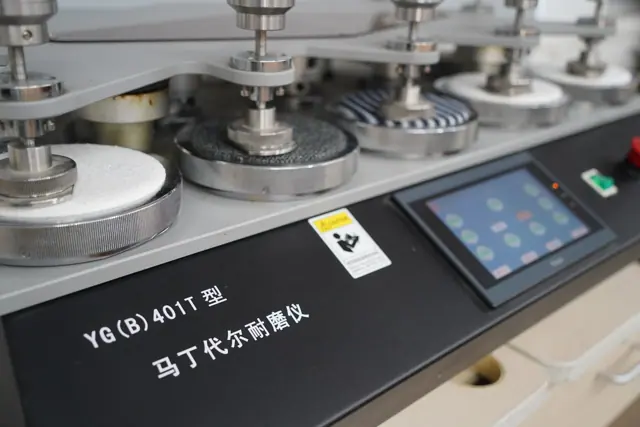
Martindale Abrasion & Pilling Tester
Instrument photograph / YG (B) 401T
INSTRUMENT 01

Martindale Abrasion & Pilling Tester

YG (B) 401T

1. Pilling: the specimen is rubbed against itself or against a standard wool abrasive; the fuzzed and pilled surface is then graded against standard photographs in a light cabinet. 2. Abrasion: the specimen is rubbed continuously against a standard abrasive cloth until it breaks down, and the number of cycles to failure is recorded.

Test ItemsPilling resistance, abrasion resistance
StandardsASTM D4966 / GB/T 4802.2, GB/T 21196
Evaluation Criteria1. Pilling: grade 1–5, grade 5 being the best; ≥3 is the usual pass line for regular orders. 2. Abrasion: reported as cycles to breakdown — the higher the number, the more durable the fabric (e.g. ≥20,000 cycles without breakdown).
02 / TESTING INSTRUMENTQuality laboratory
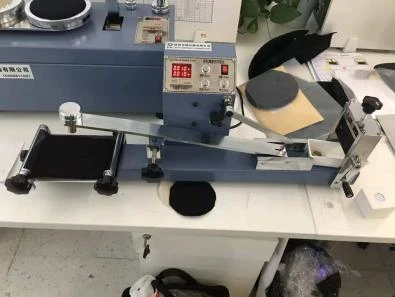
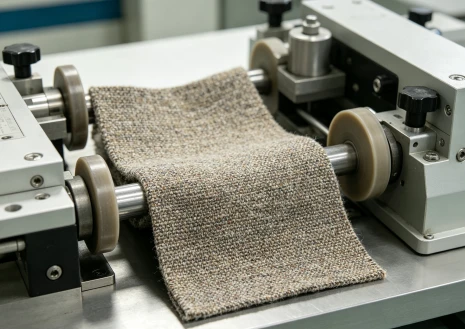
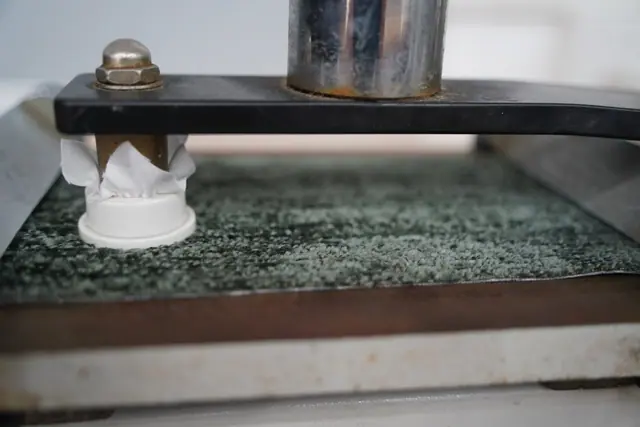
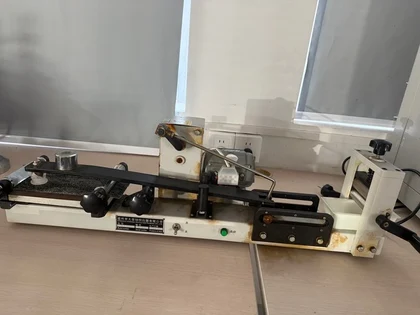
Crockmeter (Rubbing Colour Fastness Tester)
Instrument photograph / Y (B) 571B
INSTRUMENT 02

Crockmeter (Rubbing Colour Fastness Tester)

Y (B) 571B

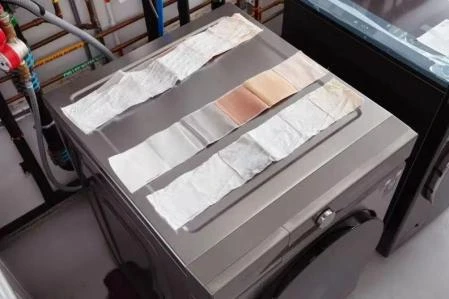
The specimen is fixed on the test bed and a standard white cotton rubbing cloth is mounted on the rubbing finger, which moves back and forth in a straight line across the specimen under a specified pressure. Dry rubbing uses a dry cloth; wet rubbing uses a cloth wetted to a specified pick-up. Afterwards the staining of the white cloth is assessed against the grey scale in a standard light cabinet.

Test ItemsColour fastness to dry and wet rubbing
StandardsAATCC 8 / GB/T 3920
Evaluation CriteriaStaining grade 1–5 1: severe staining (worst) 2: considerable staining 3: noticeable staining (≥3 is the usual pass line for most orders) 4: slight staining 5: no staining at all (best)
03 / TESTING INSTRUMENTQuality laboratory
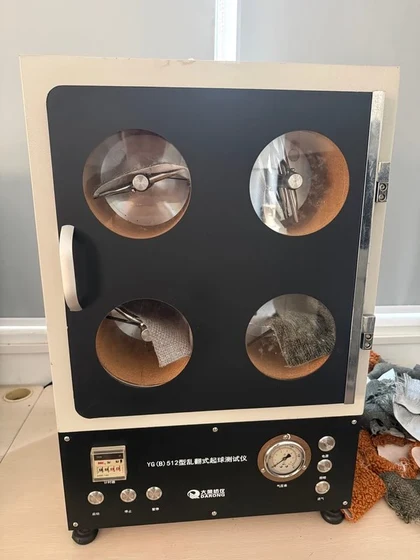
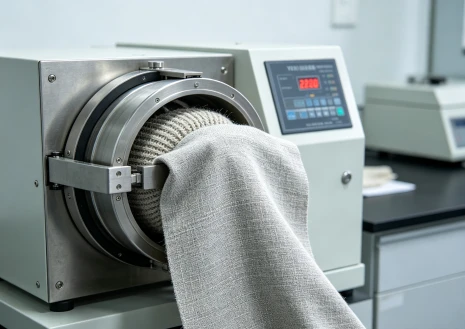
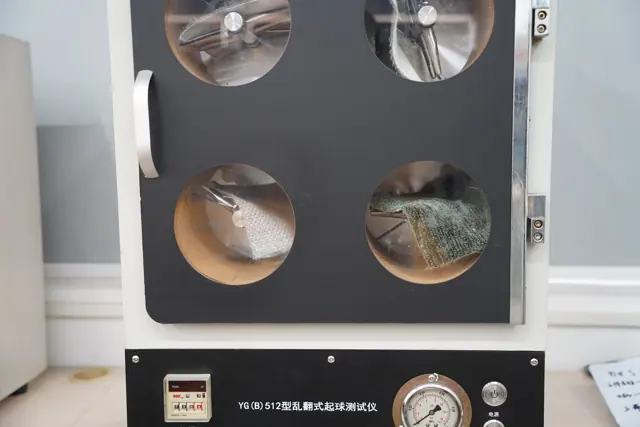
Random Tumble Pilling Tester
Instrument photograph / YG (B) 512
INSTRUMENT 03

Random Tumble Pilling Tester

YG (B) 512

Specimens are placed in separate test chambers where a high-speed impeller, together with compressed air, tosses and tumbles them freely so that they rub and strike randomly against the cork liner; fibres work loose and entangle into pills. After the test the specimens are removed and graded under a standard light cabinet.

Test ItemsPilling resistance
StandardsASTM D3512 / GB/T 4802.4-2020
Evaluation CriteriaPilling grade 1–5 1: heavy pilling, severe (worst) 2: considerable pilling 3: noticeable fuzzing with a few pills (≥3 is the usual pass line) 4: slight fuzzing, almost no pills 5: no fuzzing, no pills (best)
04 / TESTING INSTRUMENTQuality laboratory
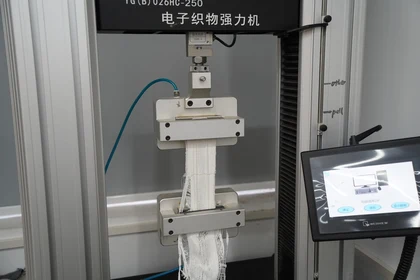
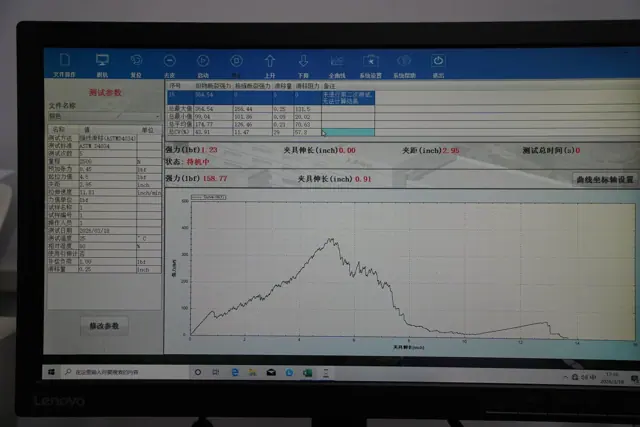
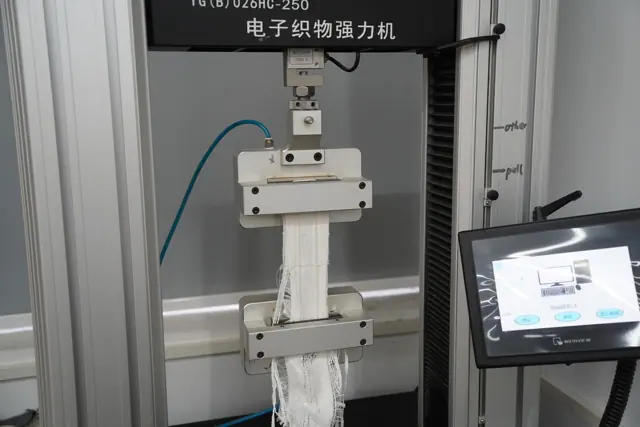
Electronic Fabric Strength Tester
Instrument photograph / YG (B) 026HC-250
INSTRUMENT 04

Electronic Fabric Strength Tester

YG (B) 026HC-250

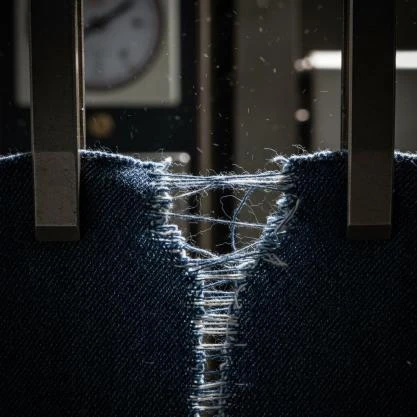
The specimen is gripped between the upper and lower jaws and stretched at a set constant speed. Sensors capture force and displacement in real time, and the instrument records the maximum force and elongation at break and calculates the elongation rate. With different jaws it can also run strip tensile, tear, seam slippage and seam strength tests.

Test ItemsBreaking strength, tearing strength, seam strength
StandardsASTM D434 / D5034 / D2261 / GB/T 3923.1, GB/T 13772
Evaluation Criteria1. Breaking strength in LBF (pounds-force): the higher the value, the stronger the fabric; elongation at break (%) is reported at the same time. 2. Tearing strength in LBF: how well the fabric resists tearing under a concentrated force. 3. Seam strength: tensile strength at the sewn seam, checking seam durability and guarding against seam burst.
05 / TESTING INSTRUMENTQuality laboratory
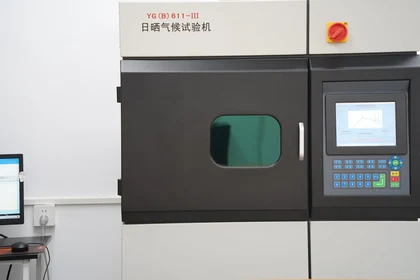
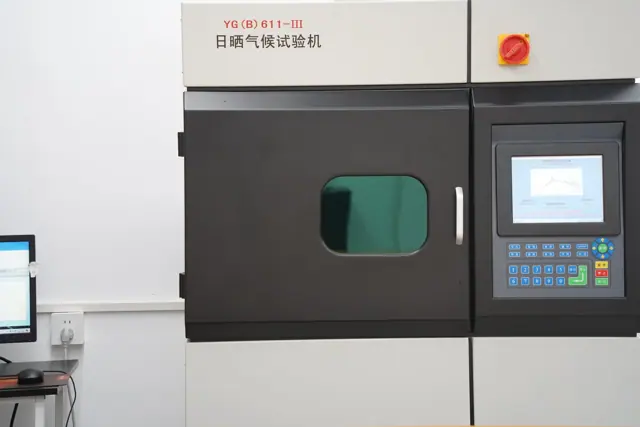
Xenon Light Fastness / Weathering Tester
Instrument photograph / YG (B) 611-III
INSTRUMENT 05

Xenon Light Fastness / Weathering Tester

YG (B) 611-III

A xenon arc lamp reproduces the solar spectrum while chamber temperature, humidity and irradiance are controlled. The specimen is exposed together with blue wool references, and after exposure the colour change of the specimen is assessed against those references. Some models add a water spray to simulate rain for weathering tests.

Test ItemsColour fastness to light
StandardsAATCC 16E / GB/T 8427
Evaluation CriteriaColour change grade 1–5 1–2: severe fading 3: slight change 4: very slight change 5: almost no change (best) High outdoor light-fastness grades are not covered here.
06 / TESTING INSTRUMENTQuality laboratory
INSTRUMENT 06

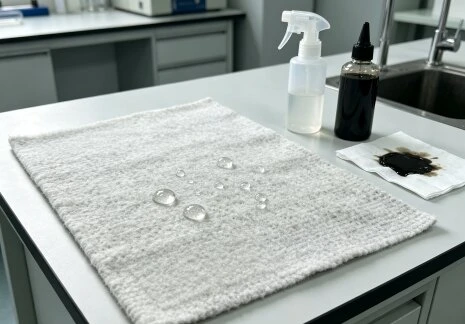
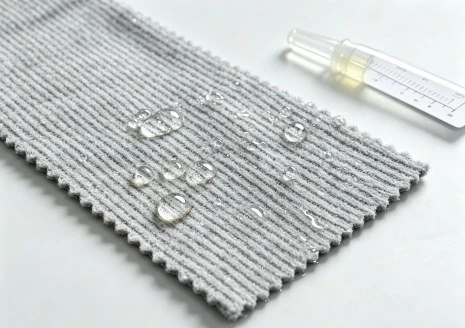
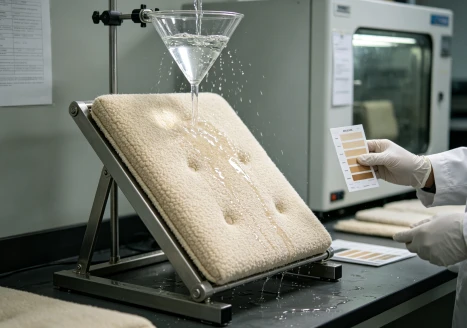
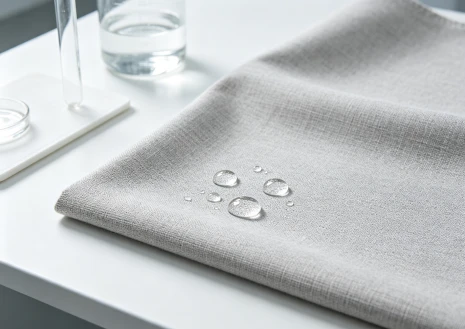
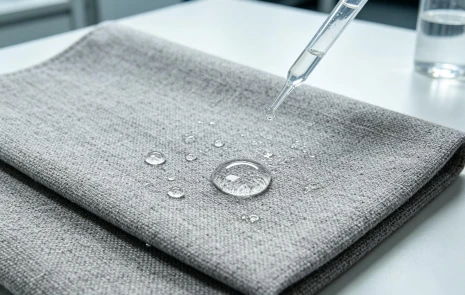
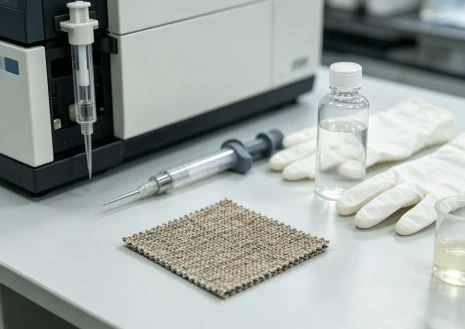
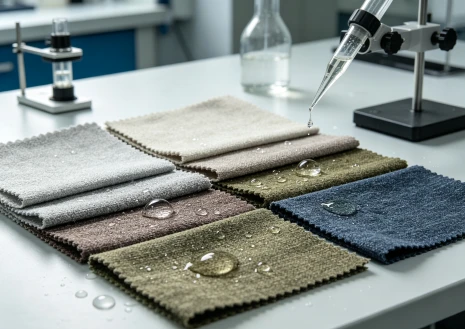
Spray Water Repellency Tester

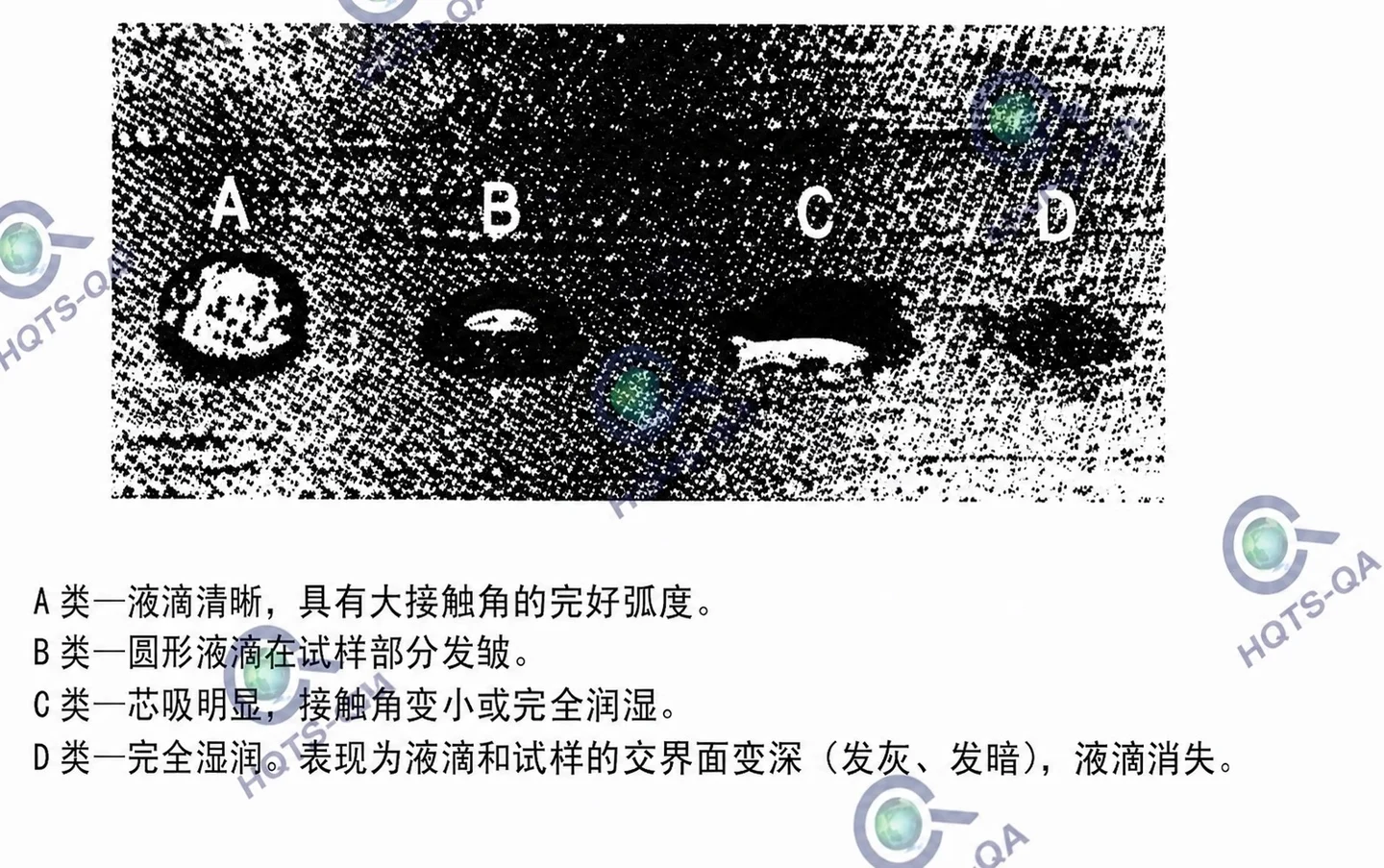
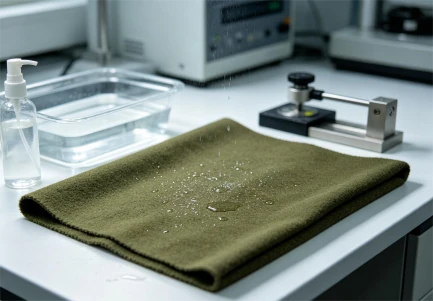
The specimen is clamped taut on a 152 mm diameter hoop and set at a 45° angle. 250 mL of distilled water at 27±1 °C is sprayed from a standard nozzle above within 25–30 seconds. When spraying ends, the wetted surface is rated against the standard rating chart.

Test ItemsSpray rating, water repellency
StandardsAATCC 22 / GB/T 4744
Evaluation CriteriaRating 0–100 0: water penetrates straight through, fabric soaked 50: the entire test surface is wetted 70: most of the sprayed area is wet 80: the surface is wetted in small local areas 90: a few isolated droplets on the surface, no continuous wetting 100: no wetting at all, water rolls off
07 / TESTING INSTRUMENTQuality laboratory
INSTRUMENT 07

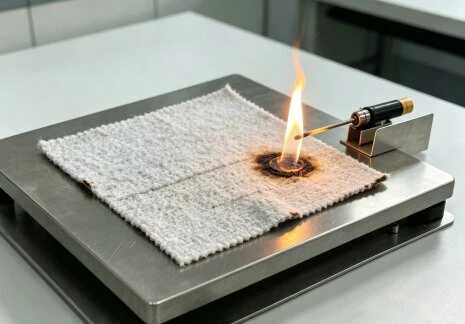
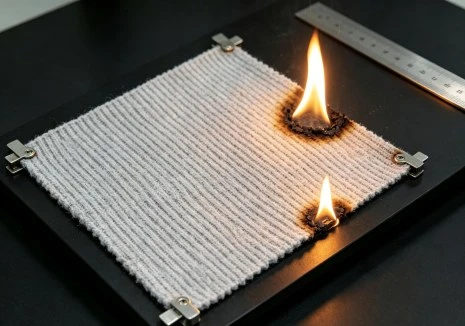
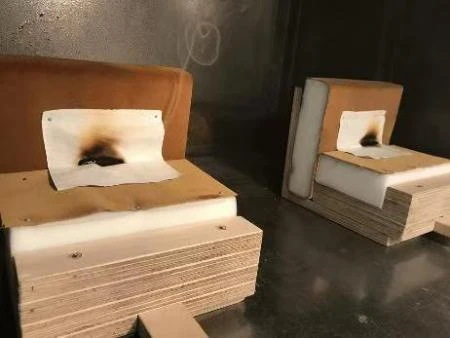
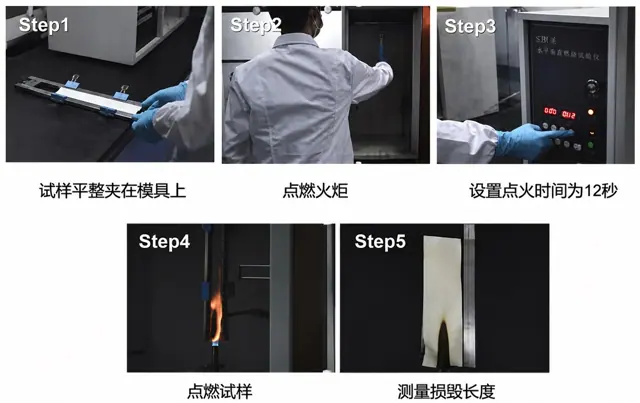
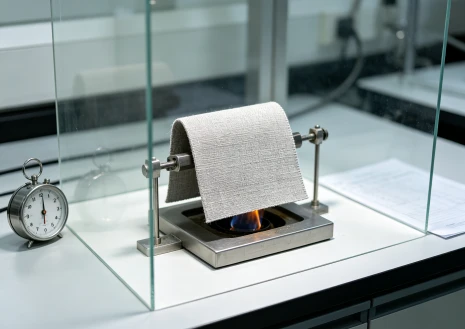
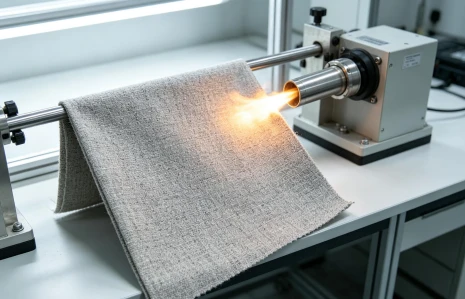
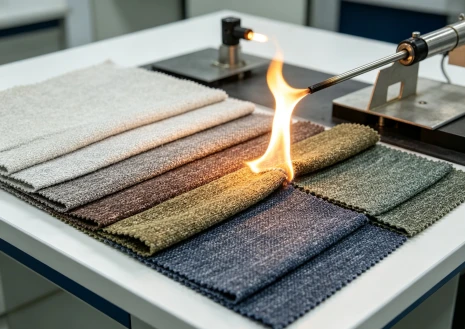
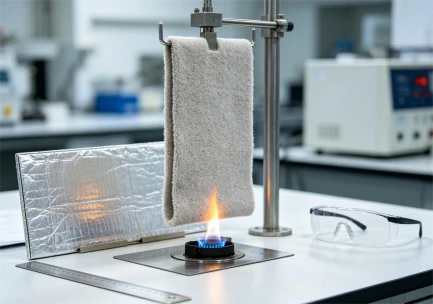
Vertical Flammability Tester

Oxygen and nitrogen are mixed in proportion and fed into the burning column at a fixed flow rate, then the sample is ignited. The oxygen concentration is adjusted repeatedly to find the critical level that just sustains combustion (50 mm or 180 s) — that level is the oxygen index (OI).
Test ItemsFlame retardancy
StandardsBS 5852 / GB/T 5455
Evaluation CriteriaOI < 21: flammable (keeps burning in normal air) OI ≥ 27: generally regarded as a flame retardant material
RayTextile

Hangzhou Raytex Fabrics Co., Ltd. — professional home textiles fabric, connecting global home aesthetics.
Contact Us

Company Address888 Chongchao Road, Chongxian Sub-district, Linping District, Hangzhou, Zhejiang, China
Factory AddressNo. 6 Nanjiao Road, Qianyuan Town, Deqing County, Huzhou, Zhejiang, China